

Melting aluminium is a precise process that requires a casting temperature of around 660 °C to 750 °C and is used both in the home hobby setting and in industrial die casting. For a high-quality result, specialised melting furnaces, refractory graphite crucibles and the consistent observance of safety measures, such as protection against moisture, are indispensable.
The physical fundamentals: the melting point of aluminium
The melting point is the thermal threshold at which solid aluminium changes into a liquid state, which forms the basis for every kind of metallurgical shaping.
At what temperature does aluminium melt?
Pure aluminium reaches its melting point at exactly 660.32 degrees Celsius. In practical use, however, and particularly when casting, the metal is usually heated to a casting temperature of between 700 °C and 750 °C in order to ensure sufficient flowability for the moulds. This temperature range ensures that the melt does not solidify prematurely as it flows into the mould.
What influence do alloys have on the aluminium melt?
The addition of alloying elements such as silicon, copper or magnesium alters the melting behaviour and usually results in a melting range rather than a fixed melting point. In industry, for example in aluminium die casting at AMZ, alloys are the standard, as they increase strength and improve flow properties. Silicon-rich alloys, for instance, lower the required temperature and reduce shrinkage during solidification.
| Material | Melting point / range (approx.) |
| Pure aluminium | 660 °C |
| Aluminium-silicon alloy (AlSi12) | 570 °C – 585 °C |
| Copper | 1,085 °C |
| Zinc alloy (Zamak) | 380 °C – 395 °C |
Melting aluminium yourself: the right equipment
The choice of equipment determines the efficiency of the melting process and the purity of the finished workpiece, with the system needing to hold the heat stably above the melting point.
Should you buy a melting furnace or build one yourself?
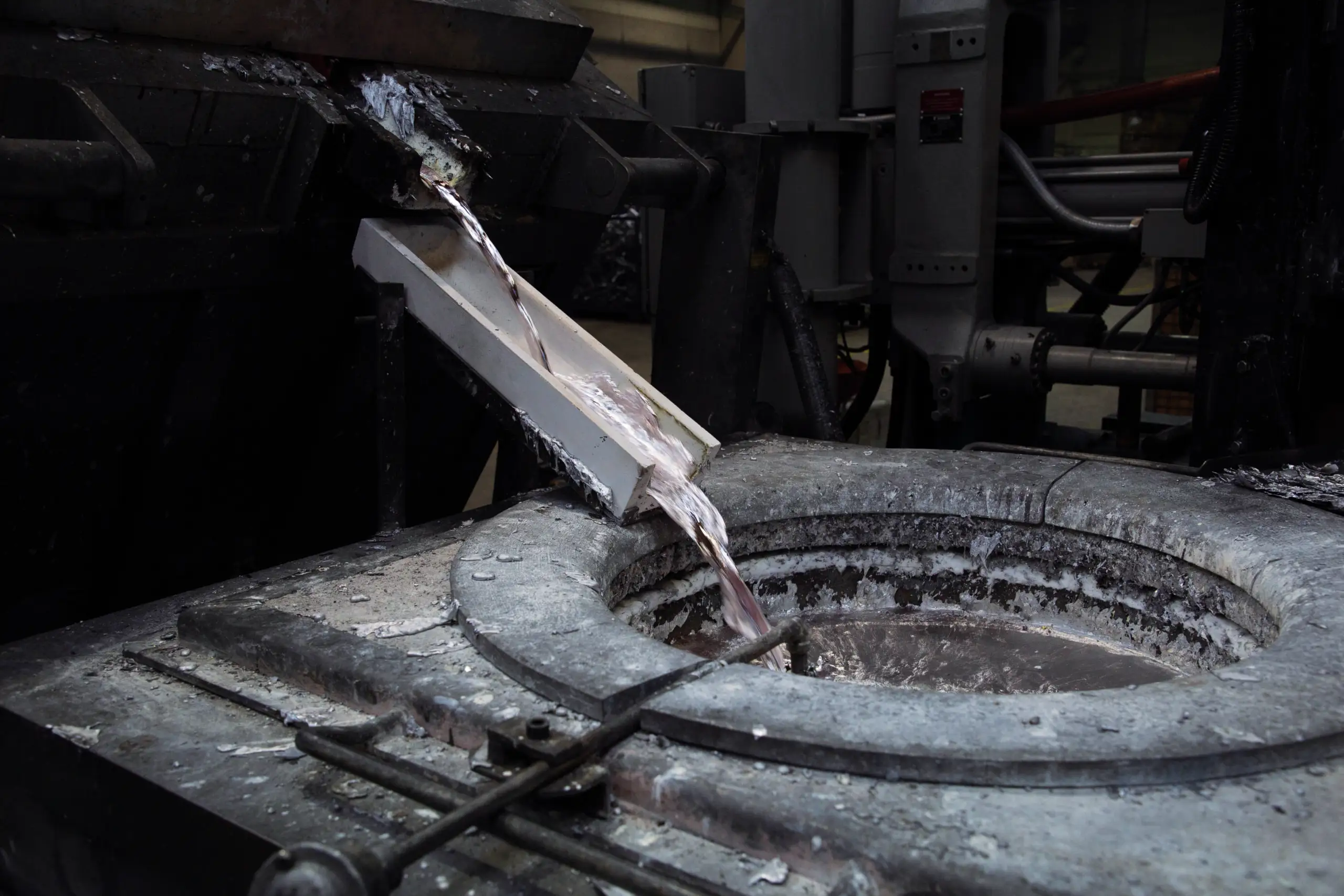
Compared with home-made versions, a purchased electric melting furnace offers more precise temperature control and higher safety standards in terms of insulation. While experienced hobbyists can construct simple furnaces from firebricks and gas burners, commercial models often guarantee more uniform heat generation of up to 1,150 °C. For professional applications, industrial systems, some of which melt in a CO2-neutral manner, are the most efficient choice.
Crucibles, tongs and moulds – what do you really need?
To melt aluminium, you absolutely require a refractory container, ideally a graphite crucible or an isostatically pressed crucible, along with suitable crucible tongs for the safe transport of the liquid mass. A graphite crucible is distinguished by its high thermal conductivity and its resistance to the aggressive aluminium melt. In addition, moulds made of sand or steel are necessary, as is a tool for removing the dross.
What are the differences between induction furnaces and gas-fired melting furnaces?
Induction furnaces use an electromagnetic field to generate the heat directly within the metal, which results in very fast melting times and high thermal efficiency. Gas-fired furnaces, by contrast, are often cheaper to purchase and are well suited to larger quantities of scrap metal, but they require a longer heating-up time. Modern foundries are increasingly turning to electric systems in order to achieve sustainability goals and minimise their ecological footprint.
Step-by-step guide: how to melt aluminium safely
A structured procedure when melting protects the user from accidents and ensures a homogeneous metal quality without unwanted inclusions.
How is the raw material prepared?
The aluminium, whether scrap, old wheel rims or ingots, must be absolutely clean, dry and ideally shredded before it is placed in the crucible. Contaminants such as plastics or paints should be removed beforehand, as they release harmful gases when aluminium is melted. Take particular care to ensure that no hollow bodies are included in which water could collect.
How does the melting process with temperature control work?
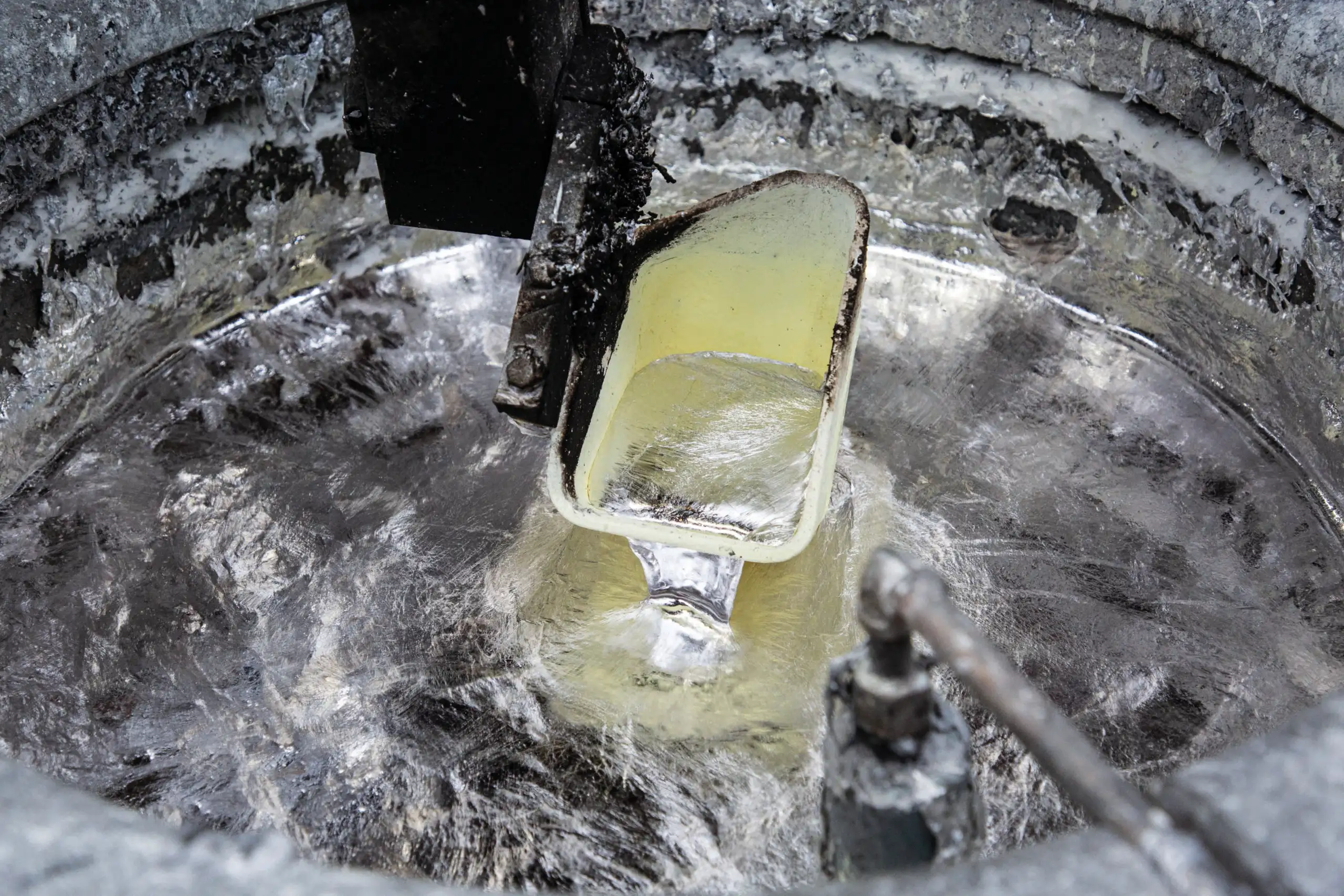
The metal is heated gradually in the already preheated crucible, with the temperature having to be monitored continuously in order to avoid overheating the melt. An electric melting furnace with a digital display makes it considerably easier to control the casting temperature. As soon as the material is completely liquid, it should be held at the target temperature only briefly, in order to minimise the absorption of gases from the surrounding air.
Why must you remove the dross?
Removing the dross, that is, the oxidised skin on the surface, is necessary to prevent pores and instabilities in the finished casting. Using a metal rod or a special ladle, the grey layer is carefully drawn off before the pure melt is poured. The use of a dross binder can support this process by binding impurities and allowing them to rise to the surface.
Safety first: the dangers of handling molten metal
Working with temperatures beyond 660 °C carries considerable risks to life and limb, which is why safety must never be secondary.

What protective equipment is mandatory in metal casting?
Full heat protection, consisting of special foundry gloves, a face shield and a heat-resistant apron, is absolutely obligatory when handling molten metal. Ordinary clothing made from synthetic fibres is potentially fatal, as it can melt when sparks fly and burn into the skin. Instead, wear heavy cotton or leather and sturdy footwear.
Why is there a risk of explosions in the presence of moisture?
Even the smallest amounts of water lead to sudden vaporisation on contact with molten aluminium and an associated expansion in volume that hurls molten metal explosively out of the crucible. This phenomenon is known as a physical explosion and is one of the most common causes of accidents in foundries. All tools and the raw material must therefore be absolutely dry and ideally preheated.
Typical mistakes and tips for a perfect casting result
A common mistake is pouring at temperatures that are too low, which leads to incompletely filled moulds and “cold shuts”. Aim for a swift but steady pouring motion in order to avoid turbulence and air inclusions in the material. For complex geometries and industrial production runs, however, professional die casting, as offered by specialist companies, is the only method for the highest precision.
Frequently asked questions about melting aluminium (FAQ)
Aluminium cans consist of a very thin alloy with a high proportion of paint, which leads to an extremely large amount of dross and a low yield of usable metal when melted.
As a rule, propane or butane is used, as these gases provide a sufficiently high combustion temperature to safely exceed the melting point of aluminium.
Depending on the furnace’s output and the quantity, the process takes between 15 and 45 minutes, with electric furnaces often offering a more stable heating-up phase.
Although stainless steel withstands the temperature, it is chemically attacked by the molten aluminium, which destroys the pot and contaminates the metal; always use graphite crucibles instead.
At excessive temperatures, the metal oxidises more quickly and absorbs more hydrogen, which leads to the formation of bubbles and instability in the finished casting.